Sunday May 20th 2012

S. Korean universities host workshop on Hizmet movement

S. Korean universities host workshop on Hizmet movementThe principles, aims and practices of the Hizmet movement have been discussed at a workshop in South Korea’s leading universities attended by Turkish and South Korean academics and other prominent figures.

S. Korean universities host workshop on Hizmet movement

S. Korean universities host workshop on Hizmet movementThe principles, aims and practices of the Hizmet movement have been discussed at a workshop in South Korea’s leading universities attended by Turkish and South Korean academics and other prominent figures.

Are there a few Hizmet(s)?

İhsan Yılmaz: Are there a few Hizmet(s?When we look at the recent discussions and debates surrounding the Hizmet (Gülen) movement especially in the Turkish media, I observe that some writers are inclined to see the movement composed of a few relatively autonomous groups with sometimes clashing visions and practices.

Are there a few Hizmet(s)?

İhsan Yılmaz: Are there a few Hizmet(s?When we look at the recent discussions and debates surrounding the Hizmet (Gülen) movement especially in the Turkish media, I observe that some writers are inclined to see the movement composed of a few relatively autonomous groups with sometimes clashing visions and practices.

Factory settings

Abdülhamit Bilici: Factory settingsIf we were to give a title to an article discussing the problems most heatedly debated in Turkey, I think the best option would be “Woes of transitioning from an empire to a nation-state.”

It has been no easy task to transform a multi-faith, multi-lingual and diversity-dominated empire into a nation-state, as the concept was understood in the 1920s. The project may even be considered impossibly utopian. Indeed, take the Kurdish issue, which everyone agrees is Turkey’s current biggest problem, or take the problematic relations between the state and religion which rear their ugly head as the secularism issue, and you will see that the main problem underlying these issues is the failure to recast the Ottoman empire’s multi-faith and multi-cultural experience into the mold that was created with a positivist and neo-nationalist (ulusalcı) ideological perspective.

The two-day workshop, “The Perception of Non-Muslims in the Media” held by the Medialog Platform of the Journalists and Writers Foundation (GYV) -- Fethullah Gülen, a well-respected Turkish-Islamic scholar, is its honorary president -- on May 12-13 on the island of Heybeliada near İstanbul was just one of the major details in the same ongoing story of transformation. The workshop started after a lunch at the Halki Seminary, which was closed down in 1971, and ended with the final declaration, published on Sunday. This workshop has proven not only that the problems of non-Muslim minorities in our country are hard to solve, but also that every problem can be settled if it is approached with goodwill and courage.

First of all, it was heart-refreshing to see that a civil society organization (CSO) established by a majority that have been victimized, humiliated and othered because of their religious beliefs has launched an initiative for the settlement of the problems of non-Muslim religious minorities. This clearly implied that the problems these non-Muslim minorities are suffering from do not stem from the majority.

The notion that made the greatest impact on the two-day negotiations among Turkish, Armenian, Greek, and Jewish intellectuals and journalists was the idea of “factory settings” as conceived by Ayhan Aktar. Kurds’ problems are not stemming from Turks, nor those faced by Christian minorities from the Muslim majority, nor those Alevis have from Sunnis, Aktar argued. The real problem that nurtures all of these problems is the “factory settings” which can be defined as the perspective imposed by the status quo or the positivist/neo-nationalist ideology. And it is not possible to find a way out by passing the responsibility on to the state, military and bureaucracy. This is because this establishment-imposed perspective has already been internalized by certain groups in society, poisoning many unsuspecting minds.

To understand, we need to take steps towards looking at each other with empathy, talking to each other and criticizing ourselves before being critical of others. Among the workshop participants was a person who, as a Muslim Turk, faced discrimination in various European countries, and this served as a perfect contribution to helping the participants dispense with their established mental frameworks. This person had seen what being from the minority meant in Europe despite being from the majority in Turkey.

Mihail Vasiliadis of Apoyevmatini, the only Greek newspaper in Turkey, which has been in print for 86 years -- since 1925 -- but today faces the risk of closure, would be best understood by a Turk who published a Turkish newspaper in Belgium or in France. “I am a member of a community whose population fell from 150,000 to 2,000, but I continue to be optimistic,” said Vasiliadis, and his words touched everyone. As we discussed the problems related to perceptions of non-Muslims in the Turkish media, we were faced with the ironical fact unique to Turkey that Turkish mainstream media outlets tend to humiliate and other pious Muslims for their apparel and religious beliefs. Even these members of the Muslim majority would envy non-Muslim minorities for certain rights they enjoyed until very recently. We have realized that a change, albeit a small one, can be made when we take steps. For instance, we discussed whether it was proper to use the phrase “non-Muslim” in the title of the meeting, and we agreed that it would be more humane and democratic to use “different religious and faith groups” instead.

Of course, it is impossible to solve all of our chronic problems at once, but still we have a formula: to review and revise the factory settings.

Factory settings

Abdülhamit Bilici: Factory settingsIf we were to give a title to an article discussing the problems most heatedly debated in Turkey, I think the best option would be “Woes of transitioning from an empire to a nation-state.”

It has been no easy task to transform a multi-faith, multi-lingual and diversity-dominated empire into a nation-state, as the concept was understood in the 1920s. The project may even be considered impossibly utopian. Indeed, take the Kurdish issue, which everyone agrees is Turkey’s current biggest problem, or take the problematic relations between the state and religion which rear their ugly head as the secularism issue, and you will see that the main problem underlying these issues is the failure to recast the Ottoman empire’s multi-faith and multi-cultural experience into the mold that was created with a positivist and neo-nationalist (ulusalcı) ideological perspective.

The two-day workshop, “The Perception of Non-Muslims in the Media” held by the Medialog Platform of the Journalists and Writers Foundation (GYV) -- Fethullah Gülen, a well-respected Turkish-Islamic scholar, is its honorary president -- on May 12-13 on the island of Heybeliada near İstanbul was just one of the major details in the same ongoing story of transformation. The workshop started after a lunch at the Halki Seminary, which was closed down in 1971, and ended with the final declaration, published on Sunday. This workshop has proven not only that the problems of non-Muslim minorities in our country are hard to solve, but also that every problem can be settled if it is approached with goodwill and courage.

First of all, it was heart-refreshing to see that a civil society organization (CSO) established by a majority that have been victimized, humiliated and othered because of their religious beliefs has launched an initiative for the settlement of the problems of non-Muslim religious minorities. This clearly implied that the problems these non-Muslim minorities are suffering from do not stem from the majority.

The notion that made the greatest impact on the two-day negotiations among Turkish, Armenian, Greek, and Jewish intellectuals and journalists was the idea of “factory settings” as conceived by Ayhan Aktar. Kurds’ problems are not stemming from Turks, nor those faced by Christian minorities from the Muslim majority, nor those Alevis have from Sunnis, Aktar argued. The real problem that nurtures all of these problems is the “factory settings” which can be defined as the perspective imposed by the status quo or the positivist/neo-nationalist ideology. And it is not possible to find a way out by passing the responsibility on to the state, military and bureaucracy. This is because this establishment-imposed perspective has already been internalized by certain groups in society, poisoning many unsuspecting minds.

To understand, we need to take steps towards looking at each other with empathy, talking to each other and criticizing ourselves before being critical of others. Among the workshop participants was a person who, as a Muslim Turk, faced discrimination in various European countries, and this served as a perfect contribution to helping the participants dispense with their established mental frameworks. This person had seen what being from the minority meant in Europe despite being from the majority in Turkey.

Mihail Vasiliadis of Apoyevmatini, the only Greek newspaper in Turkey, which has been in print for 86 years -- since 1925 -- but today faces the risk of closure, would be best understood by a Turk who published a Turkish newspaper in Belgium or in France. “I am a member of a community whose population fell from 150,000 to 2,000, but I continue to be optimistic,” said Vasiliadis, and his words touched everyone. As we discussed the problems related to perceptions of non-Muslims in the Turkish media, we were faced with the ironical fact unique to Turkey that Turkish mainstream media outlets tend to humiliate and other pious Muslims for their apparel and religious beliefs. Even these members of the Muslim majority would envy non-Muslim minorities for certain rights they enjoyed until very recently. We have realized that a change, albeit a small one, can be made when we take steps. For instance, we discussed whether it was proper to use the phrase “non-Muslim” in the title of the meeting, and we agreed that it would be more humane and democratic to use “different religious and faith groups” instead.

Of course, it is impossible to solve all of our chronic problems at once, but still we have a formula: to review and revise the factory settings.

PU awards PhD degree to Turkish scholar

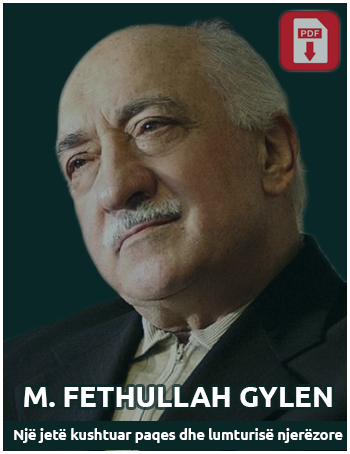
PU awards PhD degree to Turkish scholarPunjab University has issued an honorary PhD degree to mainstream Turkish scholar, thinker, prolific writer, poet and opinion leader Muhammad Fethullah Gülen in a ceremony organized at Undergraduate Study Centre here on Thursday.

The game against Hizmet

İhsan Yılmaz: The game against Hizmet“The game” in my headline refers to two separate things. The first one is football, which is indeed the game in today’s world, and the other is the game which is being played at the expense of the Hizmet movement. A campaign of psychological warfare has been launched against Hizmet, propagating that Hizmet is trying to bring down the Fenerbahçe Football Club without even a shred of evidence or any plausible explanation.

Good news from Prophet’s Way

Hüseyin GülerceLast weekend an international symposium organized by the Yeni Ümit and Hira magazines and attended by scholars from 60 countries was held in Gaziantep. Deputy Prime Minister Bekir Bozdağ and Religious Affairs Directorate President Mehmet Görmez attended the symposium, titled “Solutions to social problems from the Path of the Prophet [Muhammad].” There was great interest in the meeting and guests from foreign countries were very impressed by this interest. The meeting, which was broadcast live on Mehtap TV, saw an alternative call rising from Gaziantep.

Is Fethullah Gülen an Islamist?

Is Fethullah Gülen an Islamist?Fethullah Gülen refutes in his speeches and writings Islamist claims for an Islamic political platform: “Islam does not propose a certain unchangeable form of government or attempt to shape it. Instead, Islam established fundamental principles that orient a government’s general character, leaving it to the people to choose the type and form of government according to time and circumstances.”

 Page 1 of 27  1  2  3  4  5 » ...  Last » 

Latest Topics

S. Korean universities host workshop on Hizmet movement

The principles, aims and practices of the Hizmet movement have been discussed at a workshop in South Korea’s leading [Read More]

S. Korean universities host workshop on Hizmet movement

The principles, aims and practices of the Hizmet movement have been discussed at a workshop in South Korea’s leading [Read More]

Are there a few Hizmet(s)?

When we look at the recent discussions and debates surrounding the Hizmet (Gülen) movement especially in the Turkish [Read More]

Are there a few Hizmet(s)?

When we look at the recent discussions and debates surrounding the Hizmet (Gülen) movement especially in the Turkish [Read More]

Factory settings

If we were to give a title to an article discussing the problems most heatedly debated in Turkey, I think the best [Read More]

Factory settings

If we were to give a title to an article discussing the problems most heatedly debated in Turkey, I think the best [Read More]

PU awards PhD degree to Turkish scholar

Punjab University has issued an honorary PhD degree to mainstream Turkish scholar, thinker, prolific writer, poet and [Read More]

The game against Hizmet

“The game” in my headline refers to two separate things. The first one is football, which is indeed the game in [Read More]

Good news from Prophet’s Way

Last weekend an international symposium organized by the Yeni Ümit and Hira magazines and attended by scholars from 60 [Read More]

Is Fethullah Gülen an Islamist?

Fethullah Gülen refutes in his speeches and writings Islamist claims for an Islamic political platform: “Islam does [Read More]

Pages

Insider

Archives